


Acoplastic works closely with our sister company Kirk Plast Complete - a plastic injection moulding and rapid tooling manufacturing company. Kirk Plast Complete has its competencies within medium and small sized production series and can support in the early-stage development to full scale production.
Plastic Injection Moulding from Product Development to Serial Production
Acoplastic offers plastic injection moulding solutions for industrial applications through our sister company Kirk Plast Complete. Specialising in plastic injection moulding and rapid tooling, Kirk Plast Complete complements Acoplastic’s expertise in high-performance plastic materials and plastic machining.
From early-stage product development to repeatable serial production, we help customers identify suitable manufacturing solutions based on their technical requirements, production needs and total cost of ownership.
Plastic injection moulding can be an effective solution when plastic components need to be manufactured consistently across repeated production runs. The process offers design flexibility and the potential for efficient, repeatable production when component geometry, material selection, tooling requirements and production volumes are carefully considered.
Plastic Injection Moulding
Plastic injection moulding is a manufacturing process in which molten plastic is injected into a mould to create components with a defined shape. Once the material has cooled and solidified, the component is removed from the mould, ready for further processing or use.
For suitable applications, injection moulding offers an efficient way to manufacture consistent plastic components in small and medium-sized production series, as well as larger production runs where the component design and production volumes justify the tooling investment.
The right manufacturing solution depends on several factors, including component geometry, material properties, dimensional requirements, operating conditions, expected production volumes and tooling costs. Evaluating these aspects early helps establish an approach that meets both technical and commercial objectives.
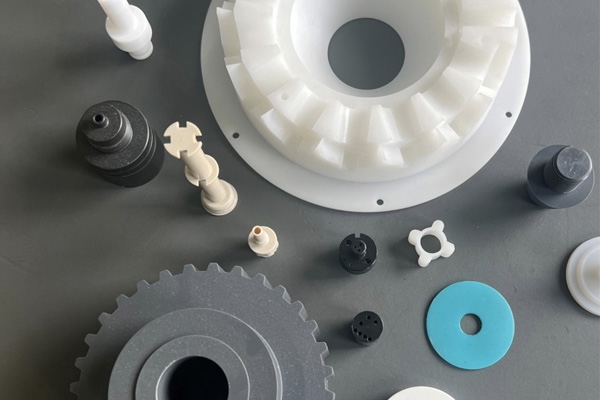
Injection Moulded Plastic Components
Injection moulding can be used to manufacture a wide range of industrial plastic components, from very small, detailed parts to larger components.
Kirk Plast Complete specialises in injection moulding for smaller and larger-sized production series, supporting projects that require a considered approach to component design, material selection and tooling. Its capabilities support customers from early-stage product development through to serial production.
Whether you are developing a new product or reviewing an existing component, Acoplastic can help you evaluate material and manufacturing options to identify a practical solution based on your technical and commercial requirements. Explore our products to learn more about our range of plastic solutions.
Tooling and Design for Manufacturing
Tooling is a key consideration in plastic injection moulding. The mould design influences component geometry, repeatability, production efficiency, and overall project cost. Considering manufacturing requirements early in the design process can help reduce unnecessary complexity and support a smoother transition from development to production.
Kirk Plast Complete has an in-house tool shop specialising in rapid tooling based on inserts for master moulds. This approach can support development and tooling requirements where flexibility and a practical route towards production are important. For further information about these capabilities, visit Kirk Plast Complete.
By considering component design, tooling requirements and expected production volumes together, we help customers work towards solutions that balance component performance, production needs and total cost of ownership.
Material Selection for Injection Moulded Components
Selecting the right plastic material is essential to the performance and service life of a component. The material must be suited to the component’s function, operating environment and manufacturing process.
Acoplastic’s knowledge of high-performance plastic materials supports the evaluation of material options alongside the requirements of injection moulding. Depending on the application, relevant considerations may include mechanical properties, temperature exposure, chemical resistance, friction, wear and dimensional stability.
Material selection should be considered together with component design and production requirements. By evaluating these factors as part of the same process, we help customers work towards solutions that are technically suitable and commercially practical. Read more about choosing the right high-performance plastic for industrial applications.
From Product Development to Serial Production
Successful injection moulding projects benefit from early coordination between product development, material selection, tooling and manufacturing. Decisions made during the design stage can affect both component performance and production costs later in the product lifecycle.
We support customers in evaluating their options from early-stage development through to production. This includes assessing design choices, material options and manufacturing methods before committing to a solution.
Our approach focuses on making the process easier for customers by considering the full production process — not just the individual component. This includes assessing expected volumes, tooling investment, operating conditions and total cost of ownership.
See how machining and injection moulding can complement one another in our customer case on machined and injection moulded plastic solutions.
Choosing the Right Manufacturing Method
Plastic injection moulding and CNC machining each offer advantages, depending on the component and its intended use. The most suitable method depends on factors such as production volume, geometry, material, dimensional requirements, surface requirements, part price, investment budgets, etc..
CNC machining can be particularly suitable for prototypes, complex components, and applications where flexibility or low initial tooling costs are important, and materials that cannot me injection moulded like PTFE. Injection moulding may be more suitable when repeatable production volumes justify the investment in tooling.
With expertise in high-performance plastic materials and plastic machining, alongside specialised injection moulding capabilities through Kirk Plast Complete, Acoplastic can help customers compare manufacturing options and select an approach suited to their component and production requirements.
Injection Moulding or CNC Machining at Acoplastic?
The right choice depends on the component and its lifecycle. Read more about our machined plastic solutions to explore CNC machining capabilities, or contact Acoplastic to discuss the most suitable approach for your application.
| Consideration | Plastic Injection Moulding | CNC Plastic Machining |
| Typical production needs | Suitable for production series where repeatability and production volumes justify tooling investment | Suitable for no injection mouldable materials, prototypes, batches where components requiring machined geometries, and where tooling investment cannot be justified |
| Tooling | Tooling investments are requiered | Does not require tooling investments |
| Component size | Can produce components ranging from micro parts to parts weighing up to 1.25 kg | Suitable for components across a range of sizes:
Turning: Up to 800 mm Milling: Max. 700 x 400 x 100 mm |
| Design and development | Component design must account for moulding requirements, tooling and material selection | Component design must account for machining requirements, machine type and material selection |
| Production consistency | Supports repeatable production when component design, tooling and process parameters are properly controlled | Supports accurate, repeatable machining depending on component geometry, material and machining requirements |
| Best approach | Consider injection moulding for repeatable production series where the component design and expected volumes justify tooling | Consider CNC machining for prototypes, flexible production and components where machined geometries are appropriate and materials are non-injection mouldable. |
Quality and Process Considerations
Consistent component quality starts with a clear understanding of the technical requirements. Component design, material selection, tooling and production conditions all influence the final result.
We work with customers to clarify application requirements and evaluate the factors that affect component performance and repeatability. These may include dimensional requirements, operating conditions, material behaviour and expected production volumes.
By considering these requirements early, we aim to reduce uncertainty during development and support a reliable transition into production. Quality requirements and documentation should be agreed according to the specific application and project.
For further information, visit our quality documentation page.
High-Tech Plastic Parts for Industrial Applications
Industrial applications can place demanding requirements on plastic components. Depending on their function, parts may need to withstand mechanical loads, temperature variations, chemical exposure, friction or wear.
Acoplastic combines knowledge of high-performance plastic materials and machining with injection moulding and tooling expertise through Kirk Plast Complete. This enables us to help customers evaluate suitable solutions for demanding industrial applications.
From initial development to repeatable production, our aim is to make complex plastic component projects easier to manage and to help customers achieve a practical balance between performance, quality and cost.
Why Choose Acoplastic for Plastic Injection Moulding?
Specialised injection moulding expertise
Access to injection moulding capabilities through Kirk Plast Complete.
Support from development to production
Technical support when evaluating material options, component design and manufacturing methods.
Small and medium-sized production series
Capabilities suited to projects where production volumes and tooling requirements must be carefully balanced.
Rapid tooling capabilities
An in-house tool shop at Kirk Plast Complete specialising in rapid tooling based on inserts for master moulds.
A broad component range
Injection moulding capabilities covering micro components through to parts weighing up to 1.25 kg.
Material expertise
Knowledge of high-performance plastic materials to help assess suitable options for the application.
Focus on total cost of ownership
Manufacturing solutions assessed in relation to performance, production requirements, tooling and lifecycle costs.
Complementary manufacturing methods
Expertise in both plastic machining and injection moulding to help evaluate suitable production approaches.
Discuss Your Injection Moulding Project
Are you developing a new plastic component or looking for a suitable manufacturing method for an existing product? Acoplastic can help you evaluate material selection, component design, tooling requirements and production volumes, drawing on the injection moulding capabilities available through Kirk Plast Complete.
Contact Acoplastic to discuss your application and explore the right solution for your plastic components.
Frequently Asked Questions
What is plastic injection moulding?
Plastic injection moulding is a manufacturing process in which molten plastic is injected into a mould and allowed to cool and solidify. It is used to produce shaped plastic components with consistent characteristics across repeated production runs.
When should plastic injection moulding be used?
Injection moulding is worth considering when component design and expected production volumes justify the investment in mould tooling. The decision should also account for material requirements, component geometry, dimensional needs, operating conditions and the expected product lifecycle.
Which plastics can be injection moulded?
The suitable materials depend on the injection moulding process, component design and application requirements. Material selection should take account of the required mechanical properties, temperature exposure, chemical resistance, wear and dimensional stability. Acoplastic can help assess material options in relation to the intended application and manufacturing method.
What is the difference between injection moulding and CNC plastic machining?
Injection moulding forms components by injecting molten plastic into a mould. CNC plastic machining removes material from plastic stock using computer-controlled cutting tools. Injection moulding may be more economical for repeatable production when tooling costs are justified, while CNC machining can offer greater flexibility for prototypes, smaller batches and components that require machining. The most suitable method depends on the individual project.
Read more about CNC plastic machining and machined plastic components.
Can Acoplastic support projects from development to production?
Yes. We help customers evaluate material options, component design and manufacturing methods from early-stage development through to production. The aim is to identify a solution that meets the technical requirements and balances production needs with total cost of ownership.
What is rapid tooling?
Rapid tooling is an approach to developing mould tooling with an emphasis on a practical and efficient route to manufacturing. Kirk Plast Complete has an in-house tool shop specialising in rapid tooling based on inserts for master moulds. The suitability of this approach depends on the component and project requirements.
What component sizes can be injection moulded?
Kirk Plast Complete’s injection moulding capabilities cover components ranging from micro parts to larger components weighing up to 1.25 kg. The suitability of a particular component depends on its design, material and production requirements.